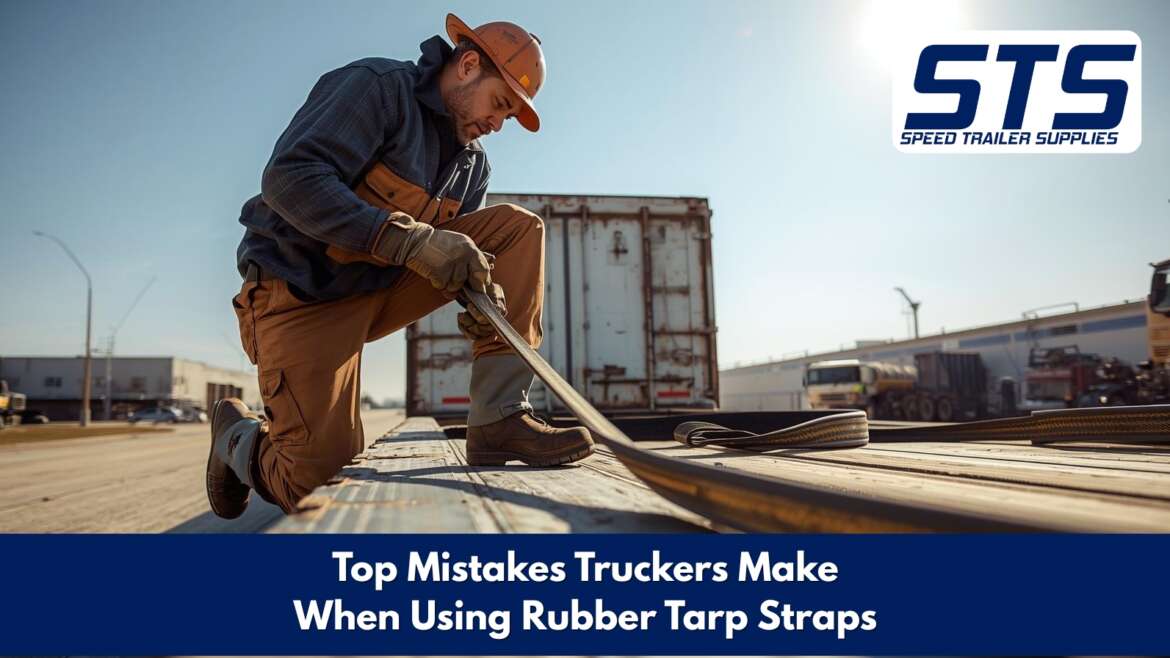
In the fast-paced trucking industry, cargo securement is not just an issue of compliance but also an issue of safety, reliability, and professionalism. Every driver is aware of the necessity to protect the loads from shifting, wind, and the rough Alberta weather. Among the methods for performing this task, the rubber tarp strap is one of the most widely used and easiest ones.
On the other hand, even the most skilled drivers have at times misapplied these accessories leading to accidents, damaged car covers, or even cargo loss. Using a rubber tarp strap the wrong way can turn out to be a very costly mistake as it can also endanger your safety and undermine your reputation.
Speed Trailer Supplies provides support to truckers in Edmonton, Nisku, Leduc, and the rest of Alberta in the form of safety and efficiency on the road. Our top-quality flatbed accessories, such as rubber tarp straps, metal corner protectors, and strap winches, are heavily used by the professional drivers who consider securement as their top priority.
Let’s take a look at some of the most common errors made by truckers when using rubber tarp straps—and how to steer clear of them for a more seamless, safer transport.
Choosing the Wrong Type of Rubber Tarp Strap
Different types of tarp straps are available on the market, and their quality varies significantly. Most truckers think that any rubber strap would be enough for the task, but the wrong type of rubber can indeed cause wear or even fail during the trip.
Main Mistake:
Using straps that are made of cheap, thin, or generic materials and not suitable for heavy-duty use.
Right Move:
Always buy heavy-duty rubber tarp straps made of natural rubber or of EPDM material having good longevity. They are precisely designed for flatbed truck parts and can endure the[]very cold temperatures, UV[]light and even constant pulling.
We at Speed Trailer Supplies have got a lot of different options for you, such as:
- Black rubber tarp straps are suitable for universal applications.
- Adjustable rubber tarp straps that can be set to different lengths and tensions.
- Heavy-duty rubber tarp straps for securing industrial-grade cargo.
Choosing the right type of rubber tarp strap means that there will be a constant tension, fewer snaps, and your overall safety on Alberta’s highways will be better.
Overstretching the Rubber Strap
One of the most common—and risky—errors that drivers commit is getting that “extra tight” fit by overstretching their straps. Although it may look tight, overstretching makes the rubber weaker and thus increases the possibility of sudden failure under pressure.
The Reasons Why It’s A Problem:
Overstretching shrinks the strap’s elasticity lifetime.
The strap can break and cause injury or damage.
It can rip through tarps or become loose during shipment.
Expert Tip:
A rubber tarp strap must not be stretched more than 50% of its original length. Thus, a 21-inch strap should not be pulled more than about 32 inches.
In case you require more tension, using several straps or switching over to a strap winch or winch strap for larger loads is recommended. These offer precise control and ensure even tension throughout your cargo.
Hooking the Strap Improperly
One of the serious mistakes that commonly occurs and leads to equipment malfunctions and accidents and it is the same in many other cases too.
Typical Errors:
- Attaching the hook to something sharp and thus allowing the rubber to be cut off.
- Using anchor points that are not suitable for tie-downs.
- Hooking the load incorrectly and unevenly on both sides.
Best Practice:
Rubber tarp straps must be securely fastened to robust, smooth anchor points. Utilizing metal corner protectors can make the sharp or rough edges of the trailer less damaging. Properly positioned tarp tensioners and straps can withstand slipping off drivers who take the Edmonton roads with their bumpy or icy conditions.
Using Worn-Out or Cracked Straps
As with the other flatbed accessories, rubber straps will eventually lose their quality and effectiveness. Strong sunlight, rain, salt, and the extremely cold Alberta winters can all contribute to this, with cracking, making the straps brittle or stretching them permanently.
Signs of Wear:
- The presence of cracks or splits on the surface can be seen.
- The straps are becoming less elastic.
- Metal hooks that are rusty or bent.
Solution:
Always check your straps before every trip. Get rid of any strap that looks worn out or that feels unusually soft or hard. Spending a few dollars on new rubber tarp straps is much better than risking thousands of dollars in cargo damage or paying fines for an unsecured load.
Speed Trailer Supplies has a large selection of flatbed truck accessories and replacement straps that can withstand the most challenging conditions of the area.
Failing to Use Enough Straps
A different considerable error is the belief that fewer straps lead to quicker loading. Actually, the use of too few rubber tarp straps results in load instability and breaking the safety regulations.
Effects:
- Higher possibility of tarp ruffling or ripping.
- Moving of cargo that might result in a load imbalance.
- Possible DOT infractions or penalties.
Advice:
For ultimate security, do not hesitate to put several straps on your load. Balance the tension applied all over and strengthen the corners or edges with heavy-duty blue tarps and metal corner protectors.
If you are not sure, just put one more strap—it will not cost you much and it will give you the comfort that your long Alberta hauls are safe.
Ignoring Weather and Temperature Factors
The unsteady weather of Edmonton can be a nightmare for truckers who are not prepared. The changes in the temperature have a direct impact on the rubber straps in a way that the flexibility and the tension of the straps are affected.
Common Mistake:
The use of the same type of strap during all the seasons without taking into account the climate conditions.
The Outcome:
In the case of very cold weather, the low-quality straps may become inflexible and eventually crack.
In very hot temperatures, they could become loose and less tense over time.
Intelligent Resolution:
Select heavy-duty rubber tarp straps or EPDM rubber straps that are guaranteed to remain flexible from -40°C to +90°C. They will work without fail during the cold winters and hot summer months of Edmonton.
Use them with rubber or heavy-duty blue tarps to make a weather-resistant cargo setup that will last.
Forgetting to Protect the Tarp
Even if they are strapped down securely, your tarp still has a chance to go through friction and tearing if there’s no proper protection. This is a critical step that a lot of truck drivers neglect during the process of load securing.
Mistake:
Allowing the rubber tarp strap to rub against the tarp or sharp edges directly.
Outcome:
- The tarp is worn out and has holes.
- The load is exposed to the elements.
- Tarps would need to be replaced more frequently, hence incurring costs.
Solution:
Under each strap, use metal corner protectors or tarp pads. This easy action balances the tension and ensures that no rubbing occurs.
By using rubber tarp straps along with protective gear, you will get more years of your tarps, and also, the look of a professional truck on the highway will be maintained.
Poor Storage and Maintenance
Improper storage can even lead to faster breakdown of your straps than regular wear. Some truckers throw their straps into the toolboxes, still wet or dirty, and thus, causing quick deterioration.
What not to do:
- Straps are to be stored in sunlight or very close to fuel and oil.
- They are left fully stretched or coiled tightly.
- Rust is not to be considered on the hooks.
Best Practices:
- Rubber tarp straps should be stowed in a cool and dry place.
- They should be cleaned often with mild soap and water.
- Hooks are to be inspected, and any showing rust or deformation are to be replaced.
Keeping your gear clean and organized also cuts down on the loading and unloading time on your flatbed. For easy maintenance, you can consider having a strap winder in your setup—it keeps your winch straps neat and free from tangles.
Relying on Rubber Straps for Heavy Loads
Rubber tarp straps, although they are really effective for holding down tarps and light cargo, are still not suitable as primary tie-downs for heavy loads.
Why It’s a Mistake:
Rubber straps are only meant for holding tarps, not for restraining heavy freight. Relying on them for large equipment or industrial loads can make the situation very unsafe.
Proper Alternative:
Use winch chains, strap winches, or winch straps for heavy or oversized cargo. These tools have rated working load limits (WLL) and give stronger, more reliable tensioning.
After that, use rubber tarp straps to fasten and secure your rubber tarps or heavy-duty blue tarps over the load to protect it from rain.
Ignoring Regular Replacement Cycles
Even the best rubber tarp strap won’t last forever. Many truckers make the mistake of using
Regardless of the quality, a rubber tarp strap eventually has to be replaced. This is a rather common mistake among truck drivers, who use the same straps till they start to break down and eventually fail without any prior notice.
What You Need to Do:
- Devise a straightforward plan for inspection and replacement.
- Change out all the straps that are starting to get worn or are old every half a year to a year.
- Always have extra straps in your toolbox in case of emergencies.
Recurrent replacement makes sure your quality is never compromised and you are always in compliance with the busy truck driving routes in Alberta.
Local Insight: Edmonton and Alberta Trucking Needs
For areas such as Edmonton, Nisku, and Leduc, where winter temperatures drop very low and trucking roads are difficult, the investment in long-lasting and weather-resistant equipment is not a luxury but a necessity.
Speed Trailer Supplies supplies top-notch flatbed accessories, which are specially made for the rigorous conditions of Alberta and are available locally. Our products include rubber tarp straps, metal corner protectors, and strap winders, all of which are made to support you in being safe, efficient, and compliant every step of the way.
Our gear will not only provide you with durability but also easy handling, regardless of whether you are carrying lumber, equipment, or construction materials.
FAQs About Rubber Tarp Straps
How long do rubber tarp straps last?
Typically, high-quality straps can last up to a year or longer with proper use and storage. Regular inspection is key.
Can I use rubber tarp straps to secure heavy machinery?
No. Use winch chains or winch straps for heavy loads. Rubber straps are ideal for tarp securement and lighter tie-down tasks.
What’s the difference between black rubber and adjustable rubber tarp straps?
Black rubber tarp straps come in fixed lengths, while adjustable rubber tarp straps offer flexibility for different cargo sizes.
Where can I buy durable rubber tarp straps in Edmonton?
At Speed Trailer Supplies, we carry premium heavy duty rubber tarp straps and all other flatbed truck accessories for local drivers and fleets.
Conclusion
The use of rubber tarp straps often leads to errors, but, at the same time, wrongs are easy to rectify. By selecting the right one, keeping the tension right, putting them away the right way, and having them replaced from time to time, you will see to it that the cargo stays safe and that the equipment lasts longer.
Regardless of whether you are an individual truck driver or a fleet manager, investing in quality rubber tarp straps and flatbed accessories is a choice that brings safety, performance, and professionalism as benefits.
Speed Trailer Supplies is the place to go for strong, low-priced, and high-grade rubber tarp straps and trailer accouterments that will make your load safe and transport it.