Securing a flatbed load properly is not just about compliance — it’s about safety, protecting your cargo, and avoiding costly roadside issues. Many drivers and contractors in Edmonton rely on rubber tarp Edmonton solutions every day, but small mistakes when using tarp straps can lead to torn tarps, lost cargo, or even serious accidents.
At Speed Trailer Supplies, we’ve seen it all. Here are the top 5 mistakes to avoid when using rubber tarp straps on flatbed loads — and how to secure your load the right way.
Using the Wrong Strap Length
One of the most common mistakes is using a strap that’s too short or too long.
- Too short: Overstretching weakens the rubber and increases the risk of snapping.
- Too long: Loose tension allows tarps to flap in wind, causing premature wear and potential cargo exposure.
Choosing the correct size rubber strap Edmonton drivers need depends on load height, tarp thickness, and anchor point spacing. Proper tension keeps your tarp secure without stressing the strap.
Overstretching the Rubber
Rubber tarp straps are designed to stretch — but only within safe limits.
Overstretching:
- Weakens elasticity
- Causes cracks over time
- Increases snap-back risk
- Reduces strap lifespan
High-quality heavy duty rubber tarp straps Edmonton professionals use are built for durability, but even the strongest straps can fail if stretched beyond their capacity.
A good rule: stretch only enough to create firm tension — not maximum pull.
Ignoring Weather Effects
Edmonton weather can be harsh — extreme cold in winter and strong sun in summer both affect rubber.
- Cold temperatures make rubber brittle.
- UV exposure causes cracking and drying.
- Moisture can speed up wear if straps are not stored properly.
Investing in quality black rubber tarp straps Edmonton drivers trust ensures better resistance to UV and cold. Still, regular inspection is critical.
Always check straps for:
- Cracks
- Fraying
- Hook damage
- Loss of elasticity
Replacing worn straps early prevents roadside problems.
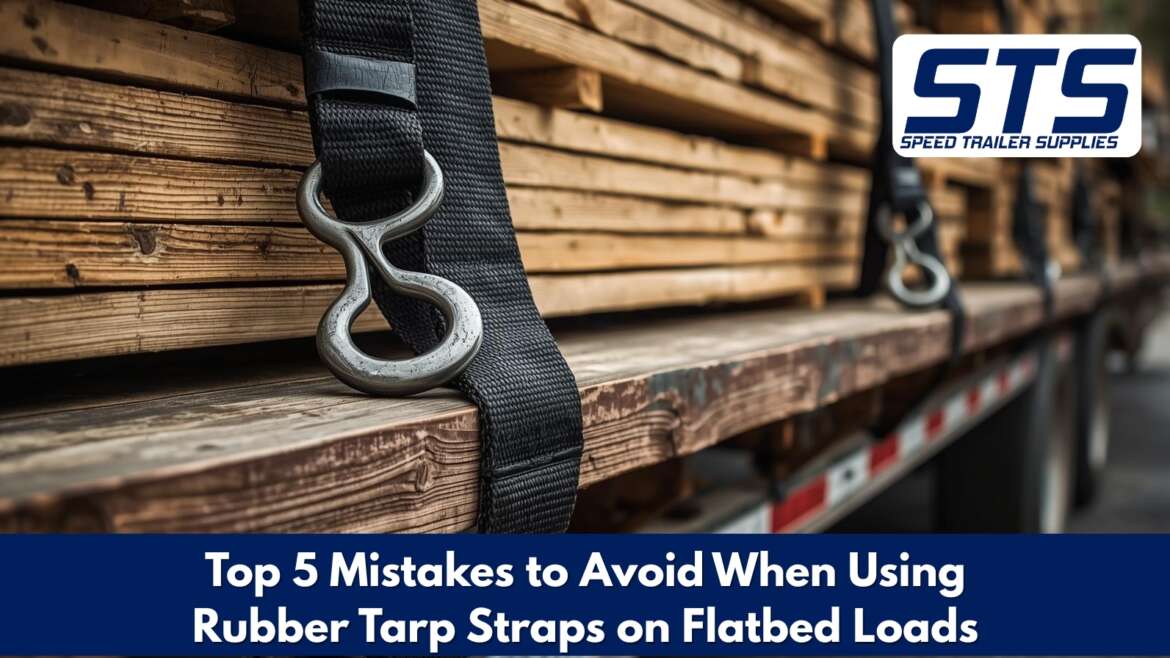
Improper Hook Placement
Another major mistake is poor hook positioning.
Common errors include:
- Attaching to weak or sharp edges
- Twisting the strap
- Securing to unstable anchor points
Hooks should be:
- Properly seated
- Aligned with tension direction
- Attached to solid trailer points
Using reliable rubber tarp Edmonton products combined with proper technique ensures load stability and safety compliance.
Mixing Old and New Straps
Many drivers reuse old straps alongside new ones. While it may seem economical, this creates uneven tension.
Older straps:
- Stretch more
- Provide weaker hold
- May snap unexpectedly
For balanced security, replace worn straps as a set — especially for commercial hauling. Consistency in strap strength improves overall tarp performance.
Not Inspecting Before Every Trip
This is the most overlooked mistake.
Before every haul, check:
- Strap elasticity
- Hook integrity
- Visible cracks or thinning
- Secure tarp positioning
Flatbed loads experience wind pressure, vibration, and shifting weight. A quick 2-minute inspection can prevent major cargo loss or compliance issues.
Professional drivers who rely on heavy duty rubber tarp straps Edmonton suppliers recommend always keeping spare straps on hand.
Why Quality Matters
Low-grade straps may save money upfront, but they wear out quickly and increase safety risks. Investing in high-quality rubber straps:
- Improves cargo protection
- Reduces replacement frequency
- Enhances roadside safety
- Minimizes downtime
At Speed Trailer Supplies, we stock durable, commercial-grade tarp straps designed for Alberta’s demanding conditions.
Call To Action
Don’t risk your load with worn or low-quality straps.
For premium rubber strap Edmonton solutions, call Speed Trailer Supplies today at:
📞 780 851 0007
Get expert advice and heavy duty rubber tarp straps built to last. Secure your load with confidence.